
2026
J. R. Meyer, I. Vurgaftman, S.-Q. Yu, R. Q. Yang, A. M. Andrews, G. Strasser, B. Schwarz, M. Razeghi, L. Shterengas, G. Kipshidze, G. Belenky, L. A. Sterczewski et al., “Midinfrared Semiconductor Photonics – A Roadmap“, accepted in Advances in Optics and Photonics (2026). ( arXiv ) ( pdf )
Summary: The paper provides a comprehensive roadmap for mid-infrared semiconductor photonics, reviewing the state of the art in materials, devices, and technologies operating across the 3–14 μm spectral range. It examines key applications, including chemical sensing, environmental monitoring, medical diagnostics, thermal imaging, and optical communications, while identifying research directions to improve device performance, manufacturability, and cost.

B. Hinkov*, J. Kunsch*, W. Mäntele*, L. A. Sterczewski* et al., “Infrared photonics for healthcare: A Roadmap for proactive and predictive health management“, in review in Journal of Physics: Photonics (2026). ( arXiv ) ( pdf )
Summary: The paper presents a comprehensive roadmap for translating infrared photonics into practical healthcare applications, covering molecular diagnostics, non-invasive monitoring, point-of-care sensing, and wearable devices. It identifies key technological and clinical challenges, emphasizing miniaturization, measurement standardization, calibration, and regulatory validation as essential steps toward reliable, proactive, and predictive health management.
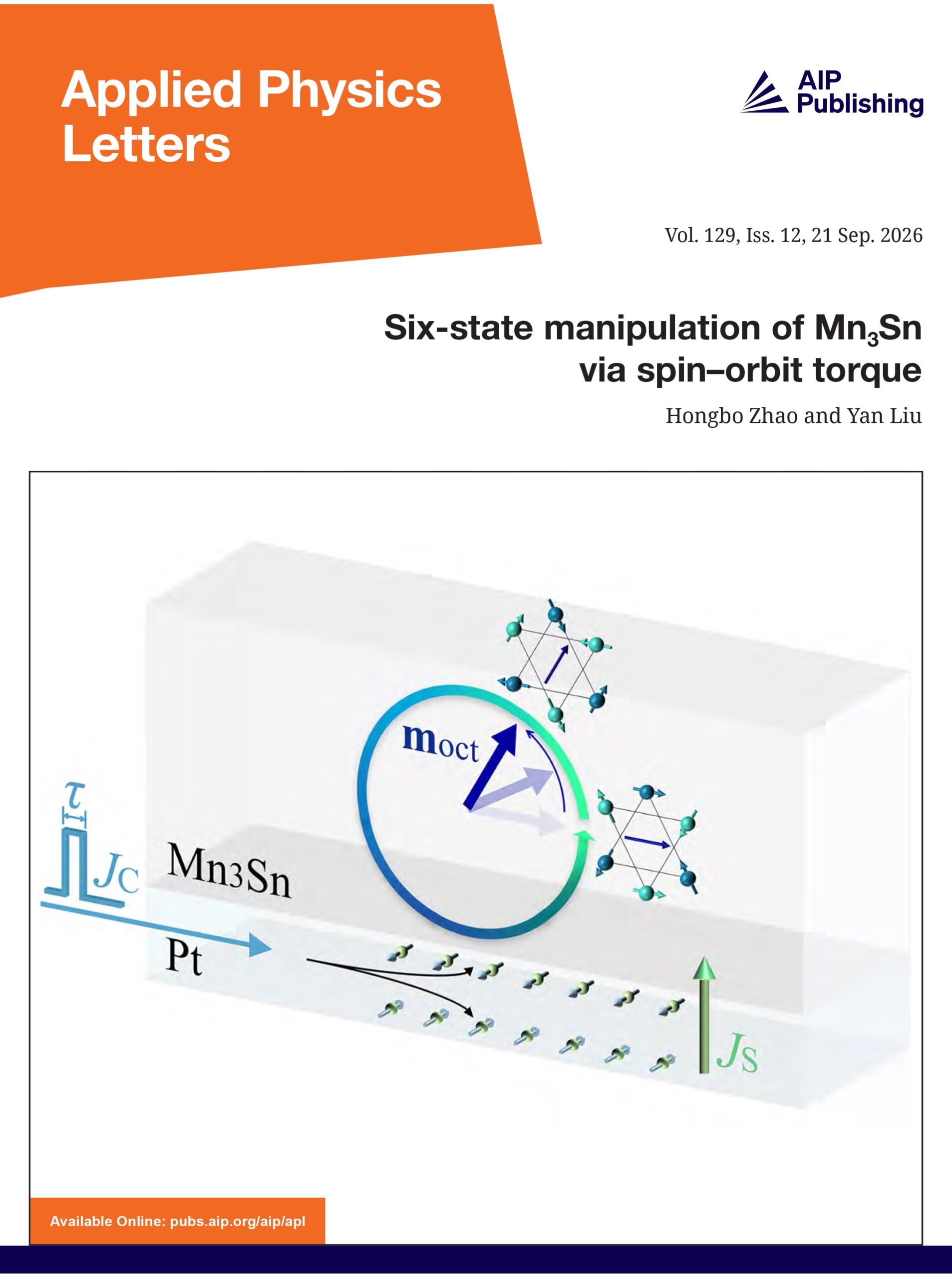
G. Gomolka, K. Klos, J. Pawluczuk, M. Kowalczyk, P. Martyniuk, and L. A. Sterczewski, “GHz-bandwidth InAs/InAsSbP barrier infrared detectors for the 3.0-3.7 μm spectral region operating at room temperature”, Applied Physics Letters 129 121106 (2026). ( pdf ) ( AIP ) ( arXiv )
Summary: The paper demonstrates room-temperature InAs/InAsSbP barrier infrared detectors operating at 3.0–3.7 μm, achieving GHz-bandwidth performance and high-speed photodetection beyond 19 GHz, with potential for high-speed mid-infrared applications.

G. Gomolka, F. Pilat, B. Schwarz, C. Soo Kim, M. Kim, C. L. Canedy, I. Vurgaftman, J. R. Meyer, and L. A. Sterczewski, “Microwave noise downconversion in interband cascade laser frequency combs”, Optica 13, 1796-1803 (2026). ( pdf ) ( OPG ) ( arXiv )
Summary: The paper demonstrates that interband cascade laser frequency combs intrinsically convert microwave-frequency noise into easily measurable low-frequency electrical fluctuations through nonlinear mixing and phase-to-amplitude noise conversion. This effect enables simplified assessment of comb coherence without requiring multi-GHz-bandwidth photodetectors,
J. Mnich, G. Gomolka, M. Schossig, J. Sotor, and L. A. Sterczewski, “Incoherent Fourier transform spectroscopy with room-temperature coverage from NIR to THz“, Optica 13, 1533-1536 (2026). ( pdf ) ( OPG ) ( arXiv )
Summary: The paper presents a Fourier-transform spectrometer capable of room-temperature operation across the near-infrared to terahertz range, covering 1–50 μm (300–6 THz) within seconds using a single optical setup. Based on a diamond beamsplitter and a windowless lithium tantalate detector, the system offers a compact, versatile approach to ultrabroadband spectroscopy.

A. F. Chlebowski, L. A. Sterczewski, and J. Sotor, “Pulse duration retrieval using a commercial laser diode with a monitor photodiode“, Optics Express 34, 6968-6977 (2026). ( pdf ) ( OPG ) ( arXiv ) ( pdf )
Summary: The paper demonstrates a technique for measuring femtosecond pulse durations at telecom wavelengths using a commercially available InGaAsP laser diode with an integrated InGaAs monitor photodiode. By combining linear and nonlinear photodetection signals, the method enables femtosecond-accuracy pulse characterization without moving parts, even at optical powers as low as 2 μW.
Q. Huang, L. Dai, F. Wu, S. Sergeyev, H. Tian, W. Chen, L. A. Sterczewski, and C. Mou, “Polarization Dynamics in Harmonic Mode Locked Vector Soliton Laser“, Chaos, Solitons and Fractals 202, 117463 (2026). ( pdf ) ( Elsevier )
Summary: The paper investigates polarization dynamics in a harmonic mode-locked fiber laser, revealing periodic transitions between polarization-locked and polarization-rotating vector soliton states as the pump power and harmonic order increase. It shows how polarization evolution affects laser stability and signal-to-noise ratio, providing insights for controlling and optimizing high-repetition-rate ultrafast fiber lasers.
2025
A. F. Chlebowski, J. Mnich, L. A. Sterczewski, and J. Sotor, “Sensitive and accurate femtosecond pulse characterization via two-photon absorption in Fabry-Pérot laser diodes“, Measurement, 119259 (2025). ( pdf ) (dataset)
Summary: The paper demonstrates accurate characterization of femtosecond laser pulses using two-photon absorption in commercially available Fabry–Pérot laser diodes, exploiting their intrinsic semiconductor nonlinearity for interferometric autocorrelation. The technique enables measurement of pulses as short as 36 fs at optical powers of just 53 μW, offering a sensitive and cost-effective alternative to conventional pulse characterization methods.
S. A. Lukasik, and L. A. Sterczewski, “Hidden Far-Field Beam Profile Artifacts in Wide-Angle Radiometric Goniometry“, Optics Express 33, 39828-39841 (2025). (pdf) (supplementary) (Code) (OPG) (dataset)
Summary: The paper investigates how optical misalignment and calibration errors in wide-angle radiometric goniometry can introduce hidden artifacts in measured far-field laser beam profiles, potentially leading to incorrect identification of transverse laser modes. The authors demonstrate a variance-based calibration procedure that corrects these distortions and enables accurate, high-resolution hemispherical beam characterization.
R. Li, H. Tian, Y. Liu, D. Dong, L. Sterczewski, and W. Zhou, “High-precision absolute distance measurement by cascaded synthetic wavelength interferometry using a single electro-optic frequency comb“, Optics Express 33, 10528-10537 (2025). ( pdf ) (OPG)
Summary: The paper demonstrates high-precision absolute distance measurement using cascaded synthetic wavelength interferometry generated by a single GHz-rate electro-optic frequency comb. The system achieves ±4 μm measurement precision over a non-ambiguity range of approximately 3.74 m, while also enabling precise velocity measurements.
H. Tian, and L. A. Sterczewski, “Impact of optical frequency comb noise on free-running dual-comb spectroscopy“, Optics Express 33, 5075-5087 (2025). (pdf) (supplementary) (OPG) (dataset)
Summary: The paper investigates how timing jitter and carrier-envelope phase noise in free-running optical frequency combs affect the accuracy of dual-comb spectroscopy. Through theoretical analysis and numerical simulations, it quantifies noise-induced absorption linewidth broadening and frequency shifts, establishing criteria for reliable high-resolution spectroscopic measurements.
2024
J. Mnich, J. Kunsch, M. Budden, T. Gebert, M. Schossig, J. Sotor, and L. A. Sterczewski, “Ultra-broadband room-temperature Fourier transform spectrometer with watt-level power consumption“, Optics Express 32, 45801-45815 (2024). ( pdf ) ( OPG ) ( arXiv ) ( dataset )
Summary: The paper presents an ultra-broadband Fourier-transform infrared spectrometer operating at room temperature, covering 1.6–31 μm (9.7–190 THz) using commercially available components. With approximately 1 W of electrical power consumption and better than 1.5 cm⁻¹ spectral resolution, the system enables portable, low-power infrared spectroscopy for applications such as atmospheric gas sensing.

L. A. Sterczewski, J. Mnich, and J. Sotor, “Broadband THz wave generation and detection in organic crystal PNPA at MHz repetition rates,” Advanced Physics Research , 2400105 (2024). (Wiley) (pdf) (arXiv) (dataset)
Summary: The paper demonstrates broadband terahertz wave generation and field-sensitive detection using the organic nonlinear crystal PNPA, driven by a compact 200 mW Er:fiber laser operating at 50 MHz repetition rate. The system enables room-temperature THz spectroscopy across 1.3–8.5 THz, achieving a dynamic range of 70 dB through long-term signal averaging.

J. Hayden, M. Geiser, M. Gianella, R. Horvath, A. Hugi, L. Sterczewski, and M. Mangold, “Mid-Infrared Dual-Comb Spectroscopy with Quantum Cascade Lasers,” APL Photonics 9, 031101, (2024). (pdf) (AIP)
Summary: The paper provides a tutorial on mid-infrared dual-comb spectroscopy using quantum cascade laser frequency combs, explaining their operating principles, key properties, and experimental implementation. It highlights their potential for rapid, high-resolution molecular spectroscopy across the 4–12 μm spectral range, leveraging high optical power, narrow linewidths, and compact laser architectures.
2023 and earlier
Full list of publications before establishing the group can be found on the PI’s website.